


Feb 13, 2024
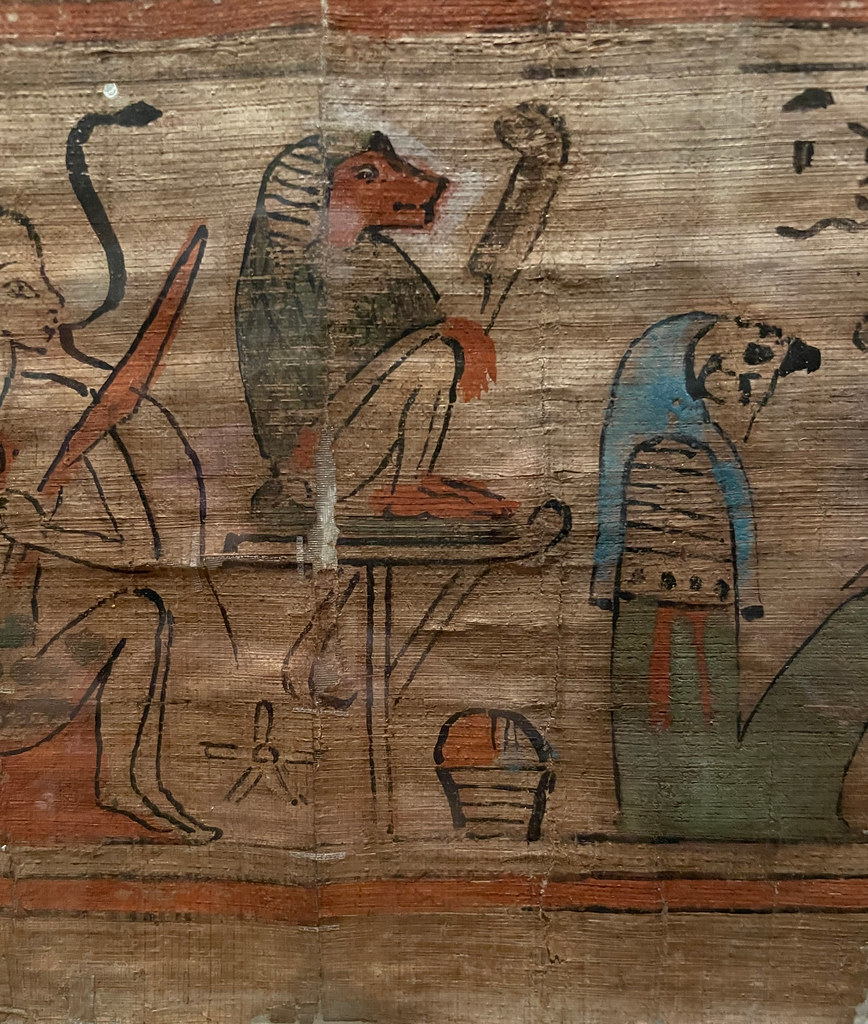
On the Amduat papyrus of Meshareduisekeb, a baboon sits on a standard, holding a maat-feather.
When: Third Intermediate Period, 21st Dynasty
Where: Egyptian Museum, Turin

seen from Germany

seen from Malaysia

seen from United Kingdom
seen from Canada

seen from India

seen from Switzerland
seen from United States

seen from Poland
seen from China
seen from Lithuania

seen from Malaysia

seen from Italy

seen from Australia

seen from Australia

seen from Japan

seen from Australia

seen from Italy
seen from Poland

seen from Australia
seen from United States
On the Amduat papyrus of Meshareduisekeb, a baboon sits on a standard, holding a maat-feather.
When: Third Intermediate Period, 21st Dynasty
Where: Egyptian Museum, Turin

Meshareduisekeb's Amduat papyrus, with features from the Book of the Dead. There's a jackal painted in golden yellow, and a seated god with a brazier for a head. The crocodile is He Who Watches What He Would Seize from Chapter 149 of the Book of the Dead. According to Journey Through the Afterlife: Ancient Egyptian Book of the Dead (edited by John H. Taylor), p 146, the red shape at his snout represents the dangerous town Ikesy; only the followers of the creator god can go there in safety, and the deceased wants to gain this privilege.
I'm trying to find out what that weird sort of watermelon-looking thing is -- I have long wondered. I think it's one of the mounds of the underworld.
When: Third Intermediate Period, 21st Dynasty
Where: Egyptian Museum, Turin
2008_0610_152606AA Egyptian Museum, Turin by Hans Ollermann Via Flickr: Ancient Egyptian papyruscollection. Egyptian Museum, Turin. And for an overview: www.flickr.com/photos/menesje/sets/ (FOR EDUCATIONAL NON-COMMERCIAL USE ONLY).
The Hathor cow emerges from the mountains; on the other side of the mountains (stylised as pink waves with dots) a blue-haired god lifts the dawning sun above his head (sideways, lifting the sun to the left). From the Amduat papyrus of Meshareduisekeb.