


Jan 25, 2018
Snowdonia | by Alejandro Roman Gonzalez
seen from Russia
seen from Canada

seen from Singapore

seen from United States
seen from Hong Kong SAR China

seen from United States
seen from United States
seen from United States

seen from Philippines

seen from India

seen from United States

seen from United States
seen from United States

seen from United States

seen from Saudi Arabia
seen from Canada

seen from United States
seen from Brazil

seen from United States
seen from Canada
Snowdonia | by Alejandro Roman Gonzalez

One of my absolute favourite waterfalls in the country. It’s only about a metre high, but when its back drop is the amphitheatre of Cwm Idwal and Devil’s Kitchen, it makes it one special place.

I'm An Internet Blogger, Get Me Out Of Here!
Being a well-travelled veteran, I'm not overly wedded much to the idea of seeing absolutely everything on offer. For one, I have, what you might call, particular tastes. But the secondn reason is that I prefer making sure my relationships wiht others is placed above the need to be difficult. A wisdom I hoped to impart on my mother with rather middling success.
Granted, there is nothing wrong with seeing everything within a given area (if there is sufficient time and interest) but occasionally, one should do advance research before imposing their wants on an entire adventuring party. And this is where I felt my mother fell short when it came to our day trip to the Tasman peninsula where Port Arthur, renowned for being a penitentiary to early convicts in Van Dieman's land along with the 1996 massacre, was located.
A UNESCO World Heritage historic site, Port Arthur is considered one of the best preserved convict settlements in Australia. Established in 1830 as a timber-getting camp, for three long years, convicts were expected to produce sawn logs for government proejcts. From 1833, it was used as a punishment station for repeat offenders from all the Australian colonies.
The system Port Arthur used was one modelled on discipline and punishment, religious and moral instruction, classifcation and separation, training and eudcation. This was evident in the grounds my family got to exploring. From the convict church to the farms and the various other buildings kept in good repair. In fact, by 1840, there were more than 2.000 individuals who lived at Port Arthur.
It closed finally in 1877 with many of its buildings dismanteld or destroyed. Others were sold and the area gradually became the centre of anew town named Carnarvon. Yet first-hand stories of convict life proved to be a major drawcard. By the 1920s, convict-period buildings had become museums, hotels and shops. The settlement was once again named Port Arthur and has become a key tourist destination for the whole of Tasmania.
And it was one of the main draws, at least to me, for taking a trip down to the southern state for a brief holiday in the last month of summer.
The visitor centre was an impressive modern entry into Port Arthur. After purchasing our tickets, we paid a visit to the gallery underneath where a scaled model was there for all to admire. I took particular interest in the exhibits featuring an apothecary set and the surgical equipment of the time. But the one my mother engaged with the most were the stories of the different convicts that had been incarcerated at Port Arthur - represented by a suit of playing cards. By the end, our family had four individual ones my mother chose to keep as a memento and souvenir of our visit.
Once we had seen our fill of the visitor centre, we headed out into the open air. As we would soon be enjoying a harbour cruise, our family decided to first pay a visit to the Government Gardens close by. While my mother struggled to push Popo along the curated pebble paths in her wheelchair, I headed up to Government Cottage and Convict Church. When we had seen our fill, my mother and stepfather decided to take a few snaps of the actual penitentiary building from a distance. We then headed to the harbour cruise jetty to await our thirty minute tour around the small harbour.
On the cruise, we learned of Point Puer (a word I had happened to learn not too long ago when I was watching a Healthy Gamer video from the one and only Dr K - yes, I know. I watch an eclectic number of video essays to while away the time grinding in video games), which was a sanctioned juvenile prison that was closed in the 1840s due to poor living conditions (all supplies needed to be brought over separately) and the fact fewer children were being transported. Those there were also beginning to age out or had already finished their sentences.
Our boat also paid a visit to the Isle of the Dead. A small island, it hosted a cemetery where almost all who died - prisoners and staff - were buried. The cemetery was closed following the closure of the Port Arthur penal settlement before being reacquired and managed by the Tasmanian government in the early 20th century. While a contingent of people were supposed to disembark on the Isle of the Dead, due to weather conditions, they were unable to do so.
Still, it was an extra fifteen or so minutes before we returned to the jetty. By then, I and the famiyl were quite hungry. As we made our way to the Asylum Cafe, we wended our way through the penitentiary, the remains of the law courts and the rebuilt police station. Of the Commandant's House and Guard Tower, we had managed to see them out on the water and I, personally, did not feel compelled to go in for a closer look.
Our late lunch was a simple affair of overpriced sandwiches and salads. Still, we ate our fill and I also got to enjoy a hot chocolate to tide me over for the rest of the afternoon. From there, we visited the Separate Prison, the Farm Overseer's Cottage and had a look at hte exterior of the Visiting Magistrate's House, the Roman Catholic Chaplain's house and the Junior Medical Officer's House.
Before too long, we had toured the entirety of the Port Arthur grounds and had headed back to the car. While I would have liked this to be the end of our Tasman Peninsula adventure, we also stopped by the Tasman's Arch and strolled along the Devil's Kitchen Circuit. Along the way, we also passed by another lavendar farm (which my mother wanted to stop by for more vibrant lavender photos though it was not the season they would be in bloom) and the Tasmanian Devil Unzoo.
Admittedly, being from Australia and having seen Tasmanian Devils in a few other zoos ALL around Australia, I had not felt compelled to pay the Unzoo a visit. But my mother was adamant about having a look around and not missing what she had deeemed 'important' sites. While I cannot fault her enthusiasm, both my stepfather and Popo were less inclined to stop.
So, when me, my stepfather and Popo enjoyed the Tasman's Arch and the walkable portion of the Devil's Kitchen circuit, my mother took the hire car so she could take a photo of the lavender farm we had passed by. The Tasman's Arch, it must be said, it a tall natural bridge along the sea cliffs. Though it used to be a blowhole, time had seen the cave roof erode, leaving only a land bridge over the top.
Once Popo, my stepfather and I had taken in everything there, we called my mother for a pick-up. For a good twenty or so minutes, we waited for her arrival. Settling my grandmother in the shade, I kept busy doomscrolling through Facebook and reading tidbits of the latest fanfiction that had caught my eye (still CaitVi) until my mother pulled into the carpark.
From there, it was an hour or so drive back to Hobart.
As the Lunar New Year was soon upon us, our family decided to celebrate by enjoying a fine and contemporary Japanese dining experience at Suminato. Though we had not made a reservation, we had arrived early enough in the evening to take a table. After a considerable meal, we left full and satisfied.
Before returning to our hotel, we also decided to drive by Hobart's historical icon: Wrest Point Hotel Casino. As Popo and I waited in the car, my mother and stepfather headed out to snap quick photos of the building.
By the time we returned to our hotel, the hour was late. In the room I shared with Popo, I noted down the key parts of my travel, played an hour of Pokemon Legends: Z-A and settled in for the night.
We would soon be returning back home to Sydney the day after tomorrow.

Fix Color Casts With Curves
If you enjoy posts like this, please support my work and support independent photography tutorials like this.
A global color cast on your landscape photo is often an easy fix with a curves adjustments. Especially when the color of the cast is a red/cyan, green/magenta, or blue/yellow. Why is curves the right choice for these tones? The individual color curves target these tones.
And for green/magenta, why use curves instead of tint? Extra control. Tint affects all the tones in your image. With curves, you can protect different tonal regions.
Check out this short tutorial and I’ll show you color correction with curves in action.
Text for print licensing
TITLE Contact Scott to commission a print or license this image.

Devil's Kitchen, Marginal Way, Ogunquit, ME

Devil's Kitchen by Dan Gildor
Via Flickr
We started the morning on the north side of Lassen Volcanic National Park in Old Station. After a huge bowl of oatmeal at JJ's Cafe, we headed to Subway Cave nearby--a lava tube that is open to the public. Make sure you bring a flashlight and a jacket as its pitch dark and 46 degrees inside! Getting there early ensured that we had the place entirely to ourselves.
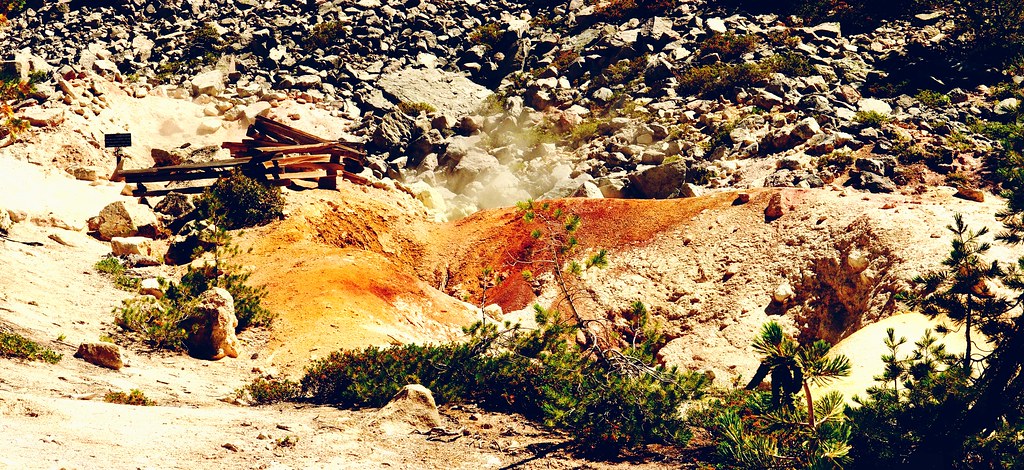
From there, we drove around the backside of the park, stopping in Westwood before we headed to the Drakesbad Guest Ranch, from where we were scheduled to go on a horseback ride. Though the original plan was to go to Terminal Geyser (a 3 hour ride), some of the guests arrived late necessitating a change in plans. Instead, we went out to Devil's Kitchen, the park's second largest display of geothermal features and only a 2 hour ride.
After the ride and the short hike down into Devil's Kitchen, we soaked in the hot springs at the Guest Ranch while hikers on the Pacific Crest Trail stocked up on their supplies.
The day ended with a fabulous pizza at Tantardino's Pizzeria in Lake Almanor Peninsula.

Devil's Kitchen//Lassen Volcanic National Park

Devil’s Kitchen, Makanda