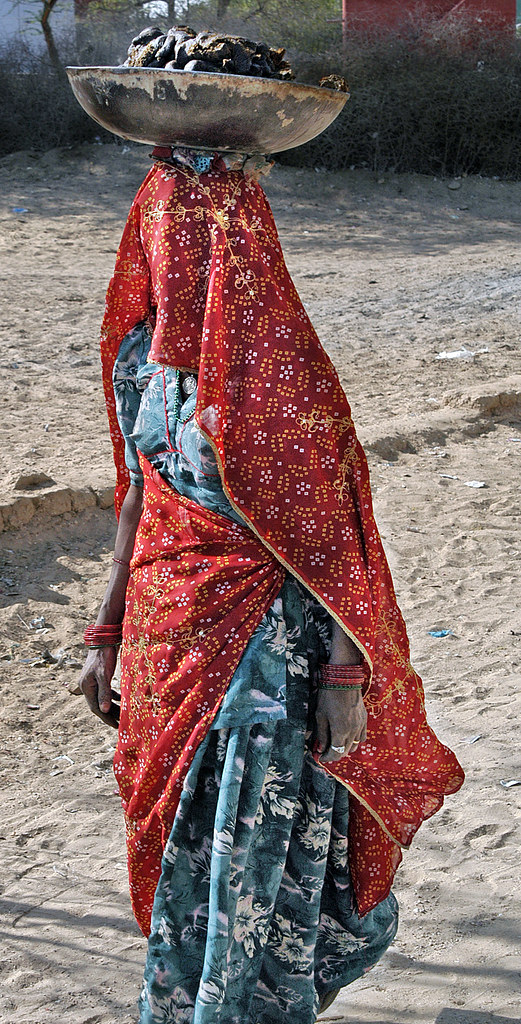
Cow Dung, Soil, and Soul — The Real Currency Grows Under Your Feet
👉 Soil as Ledger, Cow as Bank
The farmer sits cross-legged at dawn, a heap of crumpled rupee notes before him. He counts—once, twice—then pauses. His hands, cracked and strong, turn away from paper toward earth. He kneels, fingers pressing into the damp loam that once smelled of monsoon and memory. In that instant two ledgers lie open: one of money, one of life.
This is India’s oldest economy—the Dharmic ledger where value is measured not by price but by fertility, reciprocity, and renewal. For millennia, wealth meant a thriving field, a content cow, a granary that overflowed enough to share. The cow stood at the center as both biological banker and energy broker, depositing nutrients in the soil through her dung and urine, maintaining a perfect cycle of production and regeneration. Each pat of gobar was a signature on nature’s cheque—slow interest paid to the living earth.
Modern economics, however, counts only what it can bill. Soil biology—the trillion-cell economy beneath our feet—has no column in the GDP. Subsidies reward yield, not soil depth. Policy praises tonnage, not humus. We speak of inflation and growth, yet ignore the quiet bankruptcy of microbial life. The paradox of our age is clear: the farmer handles two currencies but is taught to worship only one—the rupee. The other, soil capital, erodes unseen until famine, flood, or debt remind him of its worth.
Cow-based inputs—gobar compost, jeevamrut, panchagavya—restore that capital. They rebuild microbial wealth, hold water longer, reduce dependency on chemical fertilizers, and lower costs while raising resilience. True value, this article argues, is biological first, social second, and financial last. When we restore soil, we restore society.
Industrial agriculture thrives on dependency: hybrid seeds that demand fertilizer, fertilizer that demands credit, credit that demands yield, and yield that depletes soil. This cycle of extraction is presented as “progress,” while regenerative systems are dismissed as “primitive.” Yet the future belongs to the slow accountants of life—the farmers who rebuild organic matter molecule by molecule.
This article reopens that hidden ledger. Through science, tradition, farm design, carbon accounting, and field examples, it will reveal how soil is the truest bank, and the cow its living treasury.
What’s the last thing you remember growing in your backyard? That tiny act of cultivation was not leisure—it was investment in life’s oldest economy.
👉 Part I — A Short Natural History: Cows, Microbes, and the Living Soil
🌟 The Hidden Economy Beneath Our Feet
Every handful of healthy soil contains more living beings than there are humans on Earth. Bacteria, fungi, protozoa, nematodes, earthworms—all form a soil food web where energy flows from plant sugars to microbes and back as nutrients. This web creates humus, the dark sponge-like organic matter that holds water, sequesters carbon, and buffers pH.
Soil science now confirms what traditional farmers always sensed: microbial biomass is the foundation of fertility. Each gram of cow dung teems with 10⁹ to 10¹⁰ microbes—nitrogen fixers, phosphate solubilizers, cellulose decomposers—that colonize the rhizosphere and rebuild structure. When mixed into compost or diluted as jeevamrut, these organisms multiply rapidly, inoculating barren land with life.
🌟 How the Cow Feeds the Invisible
Cow dung provides a balanced nutrient matrix—about 0.5% nitrogen, 0.2% phosphorus, 0.5% potassium—plus lignin, humic substances, and carbon for microbial fuel. Urine contributes urea, calcium, and natural antimicrobials that check soil pathogens while stimulating growth. Together they form a living fertilizer that acts as both nutrient and ecosystem engineer.
When applied, microbial colonies decompose organic residue into stable humus. This increases water-holding capacity by 25–40%, lowers erosion, and buffers temperature swings. Roots grow deeper, aeration improves, and soil acts like a sponge storing both carbon and moisture.
Critics often claim cow manure alone cannot match synthetic yields. True—if the goal is short-term spike production. But field trials from Andhra Pradesh, Gujarat, and Tamil Nadu show that in 3–5 seasons of jeevamrut-based farming, yields reach 80–110% of chemical systems while input costs drop by 60–70%. The missing piece is time: fertility from biology compounds slowly, like a savings account with exponential returns.
🌟 Everything you’ve been told about manure is incomplete. It is not a substitute for fertilizer; it is an entire regenerative ecosystem that re-creates the soil’s immune system. Where urea feeds crops, cow dung feeds the planet beneath them.
👉 Part II — Traditional Knowledge: Panchagavya, Gobar, and Living Systems
🌟 Sacred Science in Simple Vessels
Ancient Indian texts from the Surya Samhita to regional agrarian manuals describe mixtures of cow-derived substances used to revive soil and seed. The famed Panchagavya—a blend of dung, urine, milk, curd, and ghee—is both cultural ritual and microbial powerhouse. Modern microbiology finds in it lactic acid bacteria, actinomycetes, yeast, and beneficial fungi, each contributing enzymes and growth promoters.
Jeevamrut, popularized by Subhash Palekar’s natural farming, extends this tradition: 10 kg cow dung, 5 litres urine, 2 kg jaggery, 2 kg pulse flour, and a handful of soil fermented in 200 litres of water. In 48 hours, it teems with billions of microorganisms. Applied as drench or foliar spray, it transforms sterile fields into living carpets.
🌟 Ritual as Low-Tech Biotech
What we once dismissed as ritual was in fact coded ecology. Chanting, timing, and sun-moon cycles often coincided with microbial growth rhythms. The clay pot fermentation kept temperature steady; stirring added oxygen; ghee acted as lipid carrier for microbial membranes. Panchagavya was therefore the original rural bioreactor—zero-cost, renewable, and community-taught.
Proper curing is essential. Fresh dung may contain pathogens; fermentation for 7–10 days with adequate aeration eliminates risks. A simple farm-scale method: mix 10 kg dung, 5 litres urine, 2 kg jaggery, 2 kg pulse flour, 1 handful soil in 200 litres water; stir clockwise and counterclockwise twice daily. Store under shade; use within 15 days.
Beyond soil chemistry lies social alchemy. Preparing jeevamrut is communal—neighbors gather, share, exchange microbes and stories. The act itself rebuilds cooperation, a forgotten nutrient in the human ecosystem.
👉 Part III — From Waste to Wealth: On-Farm Systems & Circularity
A cow produces about 10–15 kg of dung and 8–10 litres of urine daily—enough to fertilize one-fifth of an acre per day if recycled. When treated as waste, it pollutes; when viewed as capital, it sustains. Circular farming integrates animals, crops, and energy into one loop.
1. Gobar-gas + Digestate: A small biogas unit converts dung into methane for cooking or lighting. The residue (digestate) is rich in ammonium and organic carbon. Applying it to fields improves yields while replacing LPG and synthetic nitrogen.
2. Vermicompost Beds: Cow dung inoculated with red worms creates fine, nutrient-dense compost. Earthworm castings add natural hormones like auxins and gibberellins, stimulating root growth.
3. Cow-run Compost Hubs: Several households can pool dung at a village micro-hub. Sale of compost, liquid fertilizer, and biogas generates employment—transforming sanitation into enterprise.
Let’s imagine a 1-acre natural farm.
InputChemical SystemCow-Based SystemDifferenceUrea, DAP, Pesticides₹ 10,000–12,000 / acreNil (own cow inputs)–₹ 10,000Irrigation power & water₹ 4,000₹ 2,000 (better water retention)–₹ 2,000Labor & compost prep₹ 3,000₹ 4,000 (community shared)+₹ 1,000Net Seasonal Cost₹ 17,000₹ 6,000Savings ≈ 65%Average Yield (paddy/veg)100 % baseline90–105 % (stable)Equal/BetterSoil Health (SOC %)0.3 → 0.50.3 → 0.9Doubled
The true profit is not just margin but resilience—reduced rainfall sensitivity, pest tolerance, and multi-year fertility. Over five seasons, soil organic carbon increases by 1 %, equivalent to sequestering 25 tonnes CO₂ / ha—a silent climate service unaccounted in markets.
👉 Part IV — Soil, Climate, and Carbon: Measuring Regenerative Wealth
🌟 From Carbon Loss to Carbon Ledger
Every ton of humus stores about 500 kg of carbon. When soils degrade, this carbon escapes as CO₂; when rebuilt through cow-based systems, it returns to stable organic matter. Thus, each compost pile is a miniature climate agreement.
Methane concerns around cattle often ignore context. Desi cows on open pasture emit far less methane than feedlot cattle; their emissions are balanced by carbon sequestration in manure-enriched soils. Lifecycle analyses from Indian natural-farming clusters show net-negative carbon footprints when manure returns to land instead of drains.
🌟 Measuring the Invisible
Regeneration must be quantifiable. Simple field-level indicators:
Soil Organic Carbon (SOC): Target annual increase ≥ 0.1 %.
Soil Respiration Test: A handful of moist soil under cloth overnight—earthy aroma signals microbial vigor.
Water Infiltration: Measure time for 1 inch of water to soak; improved soils absorb 2–3× faster.
Biodiversity Proxy: Count of visible arthropods and bird species.
🌟 The Regenerative Wealth Index (RWI)
ParameterWeightSample MetricSoil Carbon %SOC rise per seasonInput Savings25 %₹ saved on chemicals & waterBiodiversity20 %Pollinator & bird diversityLocal Employment15 %Labour days created via compostingComposite Score100 %Benchmark = Baseline + ≥ 30 % gain
RWI converts unseen ecological gains into social currency. A cooperative can track it seasonally, attract green investors, or certify “Dharmic Produce.”
🌟 If we don’t measure true wealth, we can’t pay it. Just as ledgers track rupees, the soil ledger must record carbon, life, and livelihoods together.
👉 Part V — Case Studies: Farms & Cooperatives that Reclaimed Soil Value
🌟 1. Village Cow-Dung Hub — Kheda District, Gujarat
In 2018, twenty-four smallholders formed a Gobar Bank. Each household contributed daily dung to a common shed. Within a year they produced 300 tonnes of compost, sold half to nearby farms, and used half themselves. Average chemical-input expense dropped 60 %, milk yield rose 15 %, and three rural youth earned stable income managing pits and sales.
Lesson: Collective logistics and branding (“Pure Kheda Gobar Gold”) turn sanitation into entrepreneurship.
🌟 2. Mid-Size Vegetable Farm — Telangana Regenerative Cluster
A 15-acre vegetable grower shifted to jeevamrut and compost teas. Within three years, soil organic carbon doubled from 0.4 to 0.8 %. Pest incidence fell 70 %; rainfed resilience improved; net profits matched previous chemical seasons with no loans.
Lesson: Transition requires patience but ensures debt-free stability. Farmers became seed mentors for nearby schools—spreading microbial literacy.
🌟 3. Urban-Agro Startup — Bengaluru Green Circuits
A youth cooperative collects cow dung from 40 gaushalas, composts it with dry leaves, and sells 25 tons/month of potting mix under brand “SoilSoul.” They partner with apartment complexes for waste segregation, creating a closed nutrient loop between city and village.
Lesson: Cow-based value chains can scale beyond rural borders—into urban circular economies.
Together these cases prove: regenerative agriculture is not charity; it is profitable ethics. When the cow’s gifts re-enter the soil, communities earn back autonomy, ecology earns back balance, and economy earns back soul.
👉 👉 Part VI — The Dharmic Economy: Reciprocity, Commons, and Moral Accounting
🌟 Soil Stewardship as Duty — Dharma as Economic Logic
Imagine dharma not only as a moral compass but as an accounting principle: obligations entered as credits and debits between human needs and ecological limits. In this ledger, soil stewardship is a duty with measurable returns. A field that is tended with restraint, rotated with wisdom, and fed with living inputs (cow dung, compost, jeevamrut) pays back in resilience interest — fewer failed crops, healthier families, and lower healthcare costs. This is not piety alone; it is practical ethics: acting today to secure the livelihoods of seven generations tomorrow.
Dharma reframes waste as moral failure. When biological waste is dumped into drains, burned in the open, or shipped away, it’s not simply an environmental externality — it is a collapse of reciprocity. The animal, the soil, and the household are part of a mutual credit system. The cow returns nutrients; the farmer returns care; the community returns shared labor and knowledge. In Dharmic economy terms, waste avoidance is a practice of justice: it keeps value circulating locally rather than letting it leak to distant corporations or toxic sinks.
Cows in a Dharmic model are simultaneously productive assets and social infrastructure. Their milk feeds, their dung fertilizes, and their presence anchors social rituals and communal rhythms. Social capital arises when cow-related activities become the scaffolding for cooperative life: shared sheds, communal composting days, and collective seed swaps. Unlike a depreciating machine, a well-managed cow herd appreciates by building soil—and that appreciation accrues to the village commons.
This social capital translates into practical benefits: pooled risk (when families share fodder and veterinary support), labor efficiency (rotating milking and compost duties), and local credit (informal loans against future milk flows or compost deliveries). The moral economy ensures these benefits are not captured by a single household but distributed as commons dividends.
🌟 Models of Community Commons — Practical Designs
Shared Cow Sheds (Gaushala Commons)
Structure: A modest shed owned by a village cooperative; stalls rented by households on a time-share basis.
Function: Centralized dung collection, segregated by fresh and cured, allowing continuous supply for composting and biogas.
Governance: A village council sets stall rules, contribution schedules (fodder, cleaning), and revenue-sharing for any sales of compost/biogas.
Benefit: Lowers per-household capital cost and concentrates expertise (fodder management, breeding advice).
Rotational Grazing Circles
Structure: Communal grazing plots with mapped rotation schedules and species mixes (grasses + legumes).
Function: Regenerates common pastures, reduces parasite load, and evenly distributes manure across landscape patches.
Governance: Simple rules (day-of-week grazing), monitoring by a small stewardship committee, and conflict-resolution through public metres (visual markers of grazing history).
Benefit: Increases fodder yield, reduces need for cut-and-carry, and spreads soil-building manure in situ.
Seed & Nutrient Banks
Structure: A small facility (could be a room in the cow shed) storing open-pollinated seed, microbial inoculum samples, and cured compost.
Function: Early-season seed loans, emergency nutrient packs, and exchange of local varieties adapted to microclimates.
Governance: Membership model with rotating stewardship and a small seed-restocking fee to ensure sustainability.
Benefit: Reduces dependency on market seed cycles and keeps genetic and microbial diversity local.
🌟 Social Contracts & Incentives — Aligning Individual and Community Health
A functioning commons requires more than infrastructure — it needs contracts that align self-interest with public good. These contracts can be informal cultural norms or codified rules. Examples:
Contribution-in-Kind: Every household commits a fixed daily contribution (e.g., 1–2 kg fodder or 500 g of dung) in exchange for proportional access to compost and biogas.
Benefit Tiers: Households that participate in labor days get priority access to premium compost blends or subsidized soil testing.
Penalty & Repair Mechanisms: Transparent fines for dumping or neglect, combined with mandatory restorative work (e.g., helping rebuild a failed compost heap).
Reciprocity Credits: A ledger (physical or digital) records contributions; credits can be redeemed for seed, veterinary aid, or grain during lean months.
These social contracts can be strengthened with recognition: certificates, local awards, and storytelling that make stewardship socially visible. Morality and economics converge when good practice becomes the honored norm — when stewardship brings status as well as soil.
🌟 Who Benefits from Current Disposal?
Ask: who benefits when biological waste becomes externalized? Corporations that profit from synthetic fertilizers, waste management firms that charge for removal, and distant processors that fail to return value to origin communities. The current disposal systems extract not just nutrients but dignity and agency. A Dharmic shift redirects those benefits back to place, converting extraction chains into reciprocal loops. In doing so, it answers a moral question: should the commons be monetized for a few, or nourished for many?
👉 Part VII — Market Pathways & Business Models
🌟 Making Regenerative Wealth Investible — The Business Logic
Regenerative systems succeed when ecological integrity meets market viability. The challenge is to translate living soil attributes into market deliverables: predictable nutrients, pathogen-safe compost, measurable carbon credits, and consistent services. Below are realistic pathways for turning cow-based circularity into sustainable enterprises.
👉 Productization: Turning Dung into Shelf-Ready Goods
Compost & Soil Blends
Product Tiers:
Everyday Compost — bulk compost for field application (low price, high volume).
Premium Potting Mix — sterilized, earthworm-enriched mix for nurseries and urban gardeners (higher margin).
Specialty Blends — compost + biochar + rock phosphate for target crops or degraded soils (value-add).
Quality Signals: Moisture content, C:N ratio, maturity (germination tests), pathogen absence (E. coli/Salmonella checks). Certification by a local lab raises buyer confidence.